

A rear light can stop working because of a service item, physical assembly damage, or an electrical fault. Identify the symptom before ordering parts.
Quick Answer
When a 2015–2022 Chevy Colorado tail light is not working, first identify which function is out and inspect the lens and housing. An intact housing with one failed function may call for bulb or socket service. A cracked, loose, or physically damaged housing may require an assembly. If several functions fail, use the correct owner’s manual or a qualified technician to diagnose the electrical system.
Test the Rear Lights First
Park the truck safely, apply the parking brake, and keep clear of traffic. Have a helper observe the rear lamps while you check the functions that apply to the vehicle:
- Parking or running lights: Check both sides.
- Brake lights: Compare left and right.
- Turn signals: Test each side separately.
- Reverse lights: Follow safe vehicle-operation procedures.
Write down exactly what works. “The tail light is out” can describe several different lighting functions, and the correct repair depends on the actual symptom.
Match the Symptom to the Next Check
| What you observe | Reasonable next check |
|---|---|
| One function is out and the housing is intact | Check the correct owner’s manual for bulb access and specification; inspect the bulb and socket. |
| A new bulb does not solve the problem | Recheck installation and inspect the socket or connection; use service information for electrical diagnosis. |
| Lens, housing, or mounting point is cracked | Compare a complete replacement assembly and verify side and fitment. |
| Moisture follows visible physical damage | Address the damaged housing or seal before repeated bulb replacement. |
| Several rear-light functions fail | Use the owner’s manual and obtain fuse, connector, ground, or wiring diagnosis rather than guessing. |
This table is a starting point, not a final electrical diagnosis. Stop if wiring is damaged, terminals are overheated or corroded, or you are unsure how to work safely around the vehicle’s electrical system.
When a Bulb Check Comes First
If the lens and housing are secure and undamaged, a bulb or socket check may be the most economical first step. Chevrolet owner’s manuals include rear-lamp access and replacement-bulb information, but specifications can vary by model year and configuration.
Use the Chevrolet manual for the exact truck instead of a generic online bulb chart. Do not substitute a bulb solely because it looks similar.
When to Consider an Assembly
A complete assembly becomes more relevant when physical damage affects the part that holds and protects the lamps. Examples include:
- A cracked or missing section of the lens or housing.
- Broken mounting points or a lamp that will not sit securely.
- Damage around the bulb sockets or rear of the housing.
- Moisture entry associated with visible housing or seal damage.
An assembly will not automatically fix a vehicle-side fuse, ground, connector, or wiring fault. Diagnose the symptom before ordering whenever the housing itself appears sound.
When the Electrical System Needs Attention
If multiple functions are out, the replacement bulb does not work, or the socket has no obvious mechanical problem, consult the electrical-system and fuse sections of the correct Chevrolet manual. Replace a fuse only with the identical size and rating specified for the vehicle.
Do not guess at fuse locations, bypass a fuse, or splice wiring based on a generic video. Use model-year service information or ask a qualified technician to test the circuit.
If the Passenger-Side Housing Is Damaged
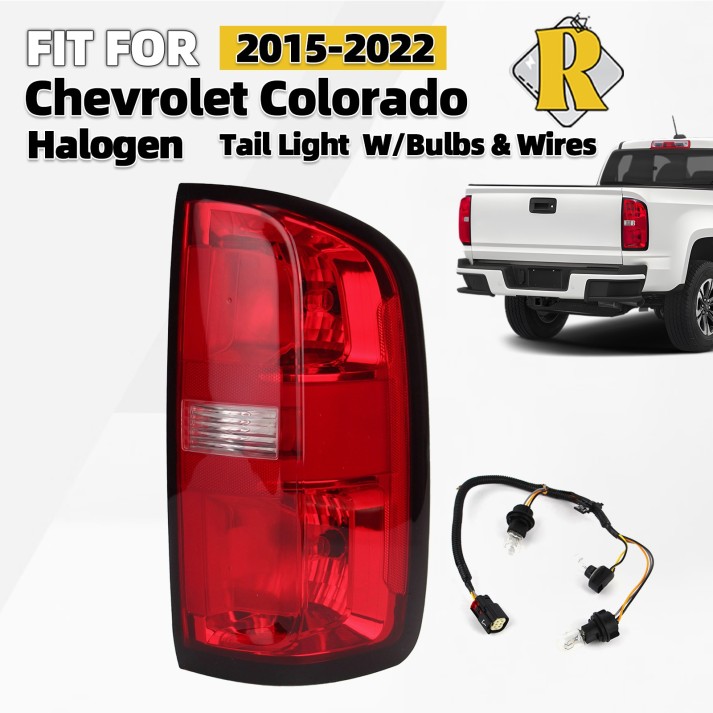
Merton lists a right/passenger-side halogen tail light assembly for 2015–2022 Chevrolet Colorado LT, WT, Z71, and ZR2 applications. Right/passenger side is also labeled RH. Confirm the original halogen setup and compare the OE/reference number before ordering.
For the Merton assembly, the listed OEM number is 84630993. See the passenger-side fitment and OEM guide for the complete pre-order checklist.
If replacement is the right next step, use the separate instructions for replacing a 2015–2022 Chevy Colorado tail light assembly.
Frequently Asked Questions
Why does one tail light function work while another does not?
Rear assemblies can contain more than one lighting function. Record exactly which function fails, then follow the bulb and electrical information in the owner’s manual for the exact model year instead of replacing the complete housing immediately.
Should I replace the bulb or the complete assembly?
Start with bulb or socket information when the housing and mounts are intact. Consider an assembly when the lens, housing, sockets, or mounting points are physically damaged. Electrical faults need diagnosis rather than an automatic assembly replacement.
What if a new bulb still does not work?
Confirm that the correct bulb is seated properly, then inspect the socket and connection. If the problem remains, use vehicle-specific service information to check the circuit or ask a qualified technician.
Does moisture mean I need a new tail light?
Look for physical cracks, a damaged seal, broken mounting points, or a housing that is not seated correctly. Persistent water entry tied to physical damage can support an assembly replacement; identify the source first.
Which side is RH on a Chevy Colorado?
RH is the vehicle’s right/passenger side when viewed from the driver’s seated position. It is not the driver-side/LH lamp.